
Quick Verdict – Hoi An vs Da Nang Where to Stay at a Glance
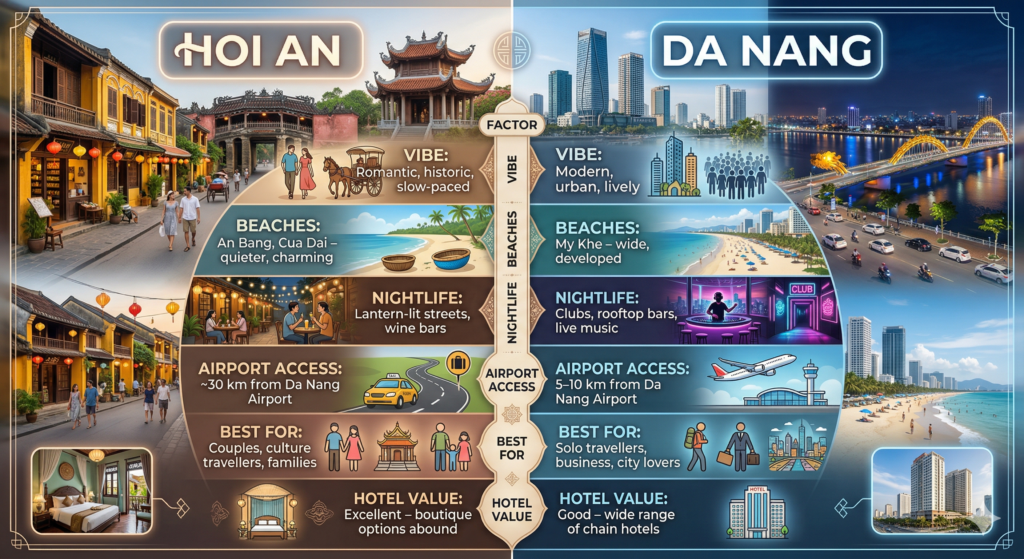
Choosing between these two Central Vietnamese destinations is one of the most common dilemmas travellers face when planning a Vietnam itinerary. Both cities sit within 30 km of each other, yet they offer very different experiences. Below is a side-by-side snapshot to help you decide quickly.
Additional Comparison Points
| Factor | Hoi An | Da Nang |
| Walkability | High – The Ancient Town is pedestrian-only and very compact. | Low – You’ll need Grabs or scooters to get between the city and the beach. |
| Food Scene | Specialized local delicacies (Cao Lau, Chicken Rice). | Diverse international cuisine and massive seafood “streets.” |
| Shopping | Custom tailoring and artisan crafts/leather. | Modern malls (Vincom, Lotte Mart) and traditional Han Market. |
| Day Trips | My Son Sanctuary, Cham Islands. | Ba Na Hills (Golden Bridge), Marble Mountains, Son Tra Peninsula. |
In short: stay in Hoi An if you want culture, calm beaches, and authentic Vietnamese charm. Stay in Da Nang if you want city infrastructure, faster airport access, and a busier social scene. Read on for the full breakdown.
1. Atmosphere & Overall Vibe
When considering hoi an vs da nang where to stay, atmosphere is usually the deciding factor for most travellers. Hoi An’s Ancient Town is a UNESCO World Heritage Site, and that status shapes everything about the city’s feel.
The narrow streets are lined with yellow-washed merchant houses dating back to the 15th century. Motor vehicles are restricted in the old town core, which means you genuinely walk or cycle everywhere. After dark, hundreds of silk lanterns cast a golden glow over the Thu Bon River — it’s one of the most photographed evening scenes in all of Southeast Asia.



Da Nang, by contrast, is a fast-growing city of roughly 1.2 million people. It has wide modern boulevards, a skyline of glass hotels, and the iconic Dragon Bridge that breathes real fire on weekend nights. It feels energetic and convenient rather than intimate.
Winner for atmosphere: Hoi An, by a significant margin, for travellers who value beauty and a sense of place over urban efficiency.
2. Beach Quality – Hoi An or Da Nang?
Both cities have beach access, but the quality and character differ considerably. This is a key consideration when weighing up hoi an or da nang for your stay.
Da Nang’s My Khe Beach stretches for roughly 30 km and is wide, clean, and lined with five-star resorts. The waves can be strong, especially from October to March, making it popular with surfers. Infrastructure is excellent — sunbeds, lifeguards, and waterfront restaurants are plentiful.
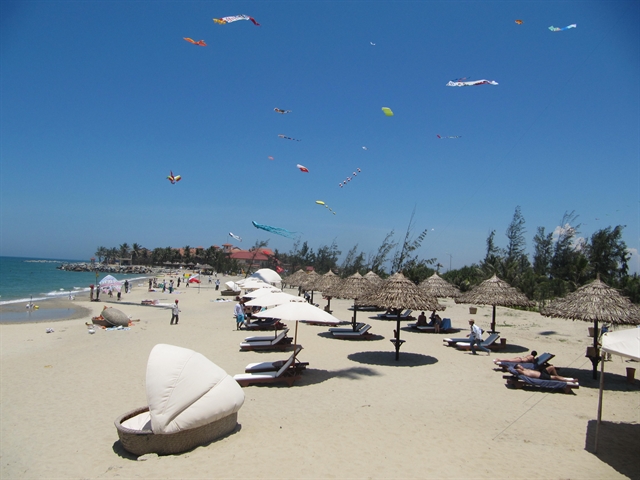
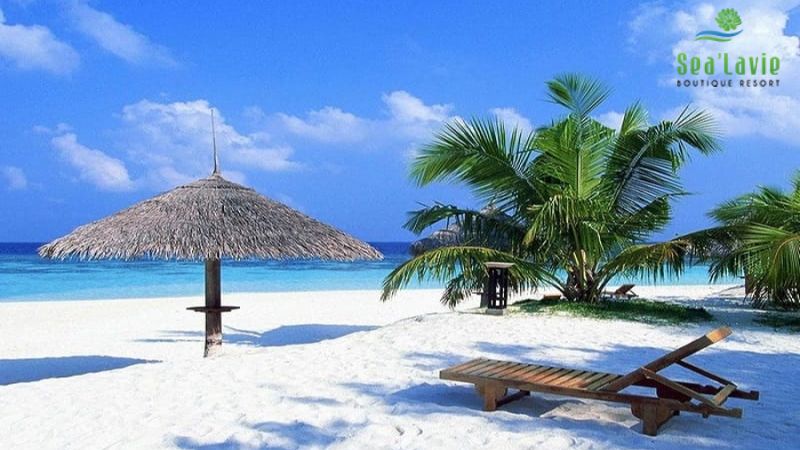
Hoi An’s An Bang Beach is smaller and less developed, which is precisely why it consistently ranks among Asia’s most beloved shores. An Bang was named one of Asia’s Top 25 most beautiful beaches, and locals will tell you the sunsets here are in a league of their own. The beach retains an unhurried, almost village-like quality, with independent cafés and beach bars rather than corporate resort strips.
Cua Dai Beach, also in Hoi An, has faced some erosion challenges in recent years — a practical detail worth knowing that many comparison articles overlook. An Bang has been better preserved and is the preferred choice among those in the know.
Winner for beaches: Hoi An (An Bang Beach) for beauty and atmosphere; Da Nang (My Khe) for facilities and surf.
3. Food Scene – Da Nang vs Hoi An Hotel Dining and Beyond
Central Vietnam has its own distinct culinary identity, and both cities do it justice — but in different ways.
Hoi An is the birthplace of cao lầu, a noodle dish made with water drawn from a specific ancient well, and white rose dumplings — both dishes you simply cannot replicate elsewhere. Street food stalls, family-run restaurants, and upscale riverfront dining all coexist within a short walk of each other. Cooking classes are also a major draw, with dozens of schools offering half-day experiences that take you from the morning market to the dinner table.
Da Nang has a broader and more diverse food scene in terms of international cuisines. You’ll find Korean BBQ, Japanese ramen, craft beer bars, and high-end Western dining alongside traditional Vietnamese mì Quảng and bánh mì. The Han Market is a fantastic spot for fresh local produce and street snacks.
If you’re staying at a beachfront property in Hoi An, look for resorts that blend East-meets-West cuisine — this style of dining reflects the city’s historic trading-port heritage and produces some genuinely memorable meals.
Winner for food: A draw — Hoi An wins on unique authenticity; Da Nang wins on variety.
4. Nightlife and Entertainment
This is one area where Da Nang clearly pulls ahead. If an active night scene matters to you when deciding where to stay in Vietnam, Da Nang is likely the better base.
The city has a growing cluster of rooftop bars, night clubs along the beachfront, and live-music venues that stay open well past midnight. The Dragon Bridge show (fire and water every Saturday and Sunday night) is a free spectacle that draws large crowds.
Hoi An operates on a different schedule. The Ancient Town has a voluntary curfew — most bars and music venues close by midnight to preserve the atmosphere of the heritage precinct. That said, the lantern-lit streets, wine bars overlooking the river, and the monthly Full Moon Lantern Festival offer a kind of enchanted evening experience you won’t find anywhere else in Vietnam.
Winner for nightlife: Da Nang for party-seekers; Hoi An for romantic, atmospheric evenings.
5. Getting Around and Airport Access
Da Nang International Airport handles the region’s air traffic, and this is a practical advantage Da Nang holds over Hoi An. If you land late or have an early departure, staying in Da Nang saves time and taxi costs. The airport is roughly 5–10 minutes from central Da Nang hotels.
Hoi An is approximately 30 km from Da Nang Airport — a journey of 45–60 minutes depending on traffic. Taxis and Grab (Vietnam’s Uber equivalent) cover the route easily, and the fare typically runs between 250,000–350,000 VND (approximately USD $10–14). Many Hoi An resorts offer airport transfer services, which simplifies the journey considerably.
Once you’re based in Hoi An, getting around is a delight. Bicycles and electric scooters can be rented cheaply, and the flat terrain makes cycling to the Ancient Town, the beach, or local villages entirely practical. Da Nang requires more reliance on motorbike taxis or ride-share apps due to its greater size.
Winner for logistics: Da Nang for airport convenience; Hoi An for in-destination mobility and charm.
6. Accommodation – Da Nang vs Hoi An Hotel Value
The da nang vs hoi an hotel debate is nuanced. Da Nang is home to a concentration of international chain hotels and large luxury resorts, particularly along My Khe Beach. These offer predictable quality, reward programme points, and extensive amenities like waterparks and international-standard conference facilities.
Hoi An’s accommodation scene skews strongly toward boutique resorts and family-run guesthouses. The value for money is often outstanding. For travellers who want a more personal, design-forward experience, Hoi An’s boutique options are hard to match at equivalent price points.
An Bang Beach, just 4 km from the Ancient Town, has emerged as Hoi An’s premier beach accommodation zone. Properties here combine easy access to the UNESCO heritage precinct with direct beachfront access — a combination Da Nang’s city hotels cannot replicate.
One standout option is Sea’Lavie Boutique Resort, located directly on An Bang Beach. The resort blends Oriental and Western architectural influences, reflecting Hoi An’s own trading-port heritage. Rooms range from Standard (from $67/night) to Sea View Deluxe ($76), Family ($117), and Suite ($184) — competitive rates for direct beachfront access on one of Asia’s most beautiful beaches. The on-site Emerald Spa and beachfront restaurant serving East-meets-West cuisine make it easy to stay on-property and still feel immersed in the best of what Central Vietnam offers.
Winner for accommodation value: Hoi An, particularly for boutique seekers and couples. Da Nang for large-scale luxury chain hotels.
Our Recommendation – Which City Should You Stay In?
Here is a clear, audience-specific breakdown to help you make a final decision on hoi an vs da nang where to stay:
- Couples and honeymooners → Stay in Hoi An. The romantic atmosphere, lantern-lit evenings, and beautiful An Bang Beach create the kind of memories that a city hotel simply cannot.
- Solo travellers and nightlife seekers → Stay in Da Nang. Better nightlife, easier airport access, and a more international social scene suit independent urban explorers.
- Families with young children → Stay in Hoi An, ideally near An Bang Beach. The calm sea, flat cycling terrain, and rich cultural activities make it exceptionally family-friendly.
- Culture and history enthusiasts → Stay in Hoi An, within easy reach of the Ancient Town. No amount of day-tripping replicates waking up in a UNESCO heritage city.
- Business travellers → Stay in Da Nang. The conference infrastructure and airport proximity make it the pragmatic choice.
- Travellers on a longer trip (5+ days) → Consider splitting your stay: 1–2 nights in Da Nang, then move to Hoi An for the remainder. Many travellers find Hoi An is where they wish they had spent more time.
For travellers who want the ideal combination of beach, culture, and comfort — without the noise of a large city — Sea’Lavie Boutique Resort at An Bang Beach, Hoi An, offers the best of all worlds. You’re only 4 km from the Ancient Town, 30 km from Da Nang Airport, and steps from one of Asia’s Top 25 most beautiful beaches. Explore our current packages and promotions or book a guided local tour to make the most of your stay in Central Vietnam.
Book direct at sealavie.vn for the Best Rate Guaranteed. You can also reach the team at 0235 3933 666 or hotline 08888 93 909.
Frequently Asked Questions
Is it better to stay in Hoi An or Da Nang?
It depends on your travel priorities. Hoi An is ideal for culture lovers, couples, and beach seekers who want a relaxed, atmospheric experience. Da Nang suits travellers who prefer city amenities, faster airport access, and a more active nightlife scene. Many visitors to Central Vietnam choose Hoi An as their primary base and take day trips to Da Nang.
How far is Hoi An from Da Nang Airport?
Hoi An is approximately 30 km from Da Nang International Airport. A taxi or Grab ride typically takes 45–60 minutes and costs between USD $10–14. Many resorts, including Sea’Lavie Boutique Resort, offer private airport transfer services.
Can I stay in Hoi An and visit Da Nang as a day trip?
Yes, absolutely. The short distance makes it very easy to visit Da Nang’s Marble Mountains, Dragon Bridge, Ba Na Hills, or My Khe Beach as a day trip. Several local tour operators in Hoi An offer organised day excursions to Da Nang.
What is the best beach near Hoi An vs Da Nang?
An Bang Beach near Hoi An is widely considered more beautiful and peaceful, having been named one of Asia’s Top 25 most beautiful beaches. Da Nang’s My Khe Beach is longer, more developed, and better suited to surfers and travellers who want full resort amenities. For a quiet, scenic beach holiday, An Bang is the superior choice.
Final Thoughts
The hoi an vs da nang where to stay question has no single universal answer — but for the majority of leisure travellers, Hoi An edges ahead. Its UNESCO heritage status, world-class beaches, outstanding food culture, and high-value boutique accommodation make it one of the most rewarding bases in all of Southeast Asia.
Da Nang is a fantastic city and a worthy destination in its own right, but it functions best as a complement to Hoi An rather than a replacement for it.
If you’re ready to experience the best of Central Vietnam — from the lantern-lit Ancient Town to the shores of An Bang Beach — Sea’Lavie Boutique Resort is ready to welcome you. With rates from just $67 per night, on-site spa, beachfront dining, and a team dedicated to making your stay unforgettable, there’s no better place to call home during your Hoi An adventure.